

Infrequently Asked Questions About Jeffrey Epstein, Part One: The Money Thing
The first installment of a mammoth Epstein Q&A, featuring Ghislaine Maxwell, Douglas Leese, Adnan Khashoggi, Robert Maxwell, Ehud Barak, Prince Andrew, Les Wexner, and much more.
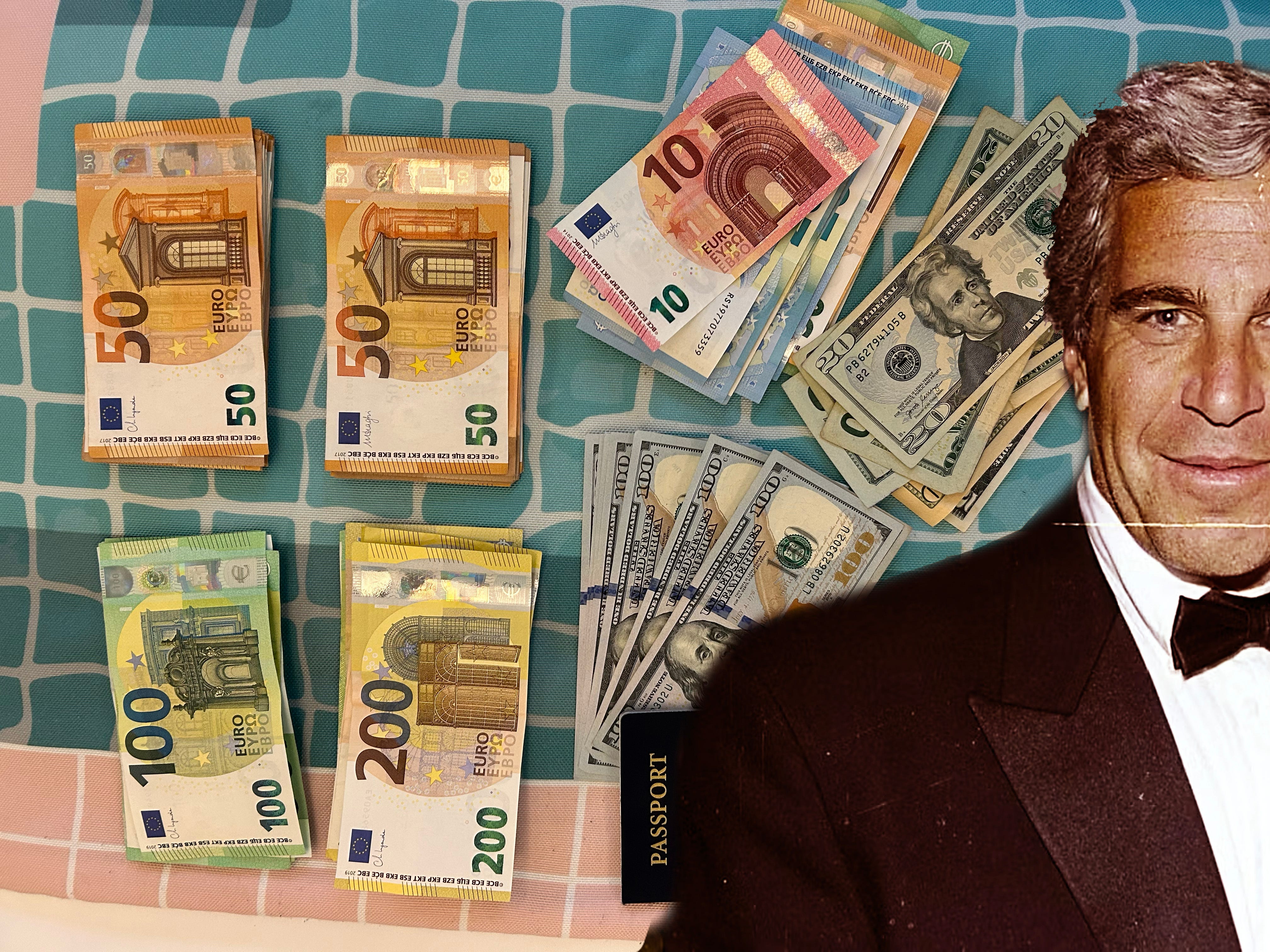
. . . I’ll pay the cost
For wanting things that can only be found
In the darkness on the edge of town.
—Bruce Springsteen
Jeffrey Epstein is unknowable—by design.
Unlike the bombastic Robert Maxwell, his model if not his mentor, Epstein kept a low profile. For decades, none of us peasants had ever heard of him—and if we had, he was yet another reclusive “financier,” indistinguishable from the other eccentric UHNWIs who live in those Bruce Wayne mansions on Billionaire’s Row.
If not for Virginia Guiffre and the other survivors; the indefatigable Miami Herald reporter Julie K. Brown; and, of course, Donald Trump (basically the schmuck in Goodfellas who after being expressly warned not to flash his money after the Lufthansa heist bought the pink Cadillac and the fur coats), would we even be aware of Epstein’s existence?
For decades, the press all but ignored him. There was the “Bachelor of the Year” snippet in Cosmopolitan in 1980, the Landon Thomas Jr. feature in New York magazine in 2002 (Trump: “He’s a lot of fun to be with. It is even said that he likes beautiful women as much as I do, and many of them are on the younger side.”), and a year later, Vicky Ward’s “The Talented Mr. Epstein” profile for Vanity Fair—shorn, at the eleventh hour, and over her vehement objections, of the bit about Epstein’s sexual abuse of the Farmer sisters, ostensibly because her editor didn’t think it was “earth-shattering” that Epstein was sexually abusing a 16-year-old.
Aside from the occasional mention in the New York tabloids, usually citing Epstein’s proximity to Bill Clinton or Trump, that was about it. There was so little about him in print that the Palm Beach Post reporter filing the July 2006 news story about his indictment for solicitation got him mixed up with another Jeffrey Epstein—one who wrote bad checks.
Even now, after God knows how many articles and podcasts and Michael Wolff media hits, what do we really know about Jeffrey Epstein? What can we say for certain?
For many years, he and Ghislaine Maxwell ran an industrial-scale child sex trafficking operation.
He was the “closest friend” of Donald Trump, who is currently moving heaven and earth to keep his activities with Epstein under wraps.
His name was on JPMorgan Chase’s “Wall of Cash,” because he made the firm so much money.
There were over a billion dollars’ worth of suspicious transactions on his accounts at JPMorgan Chase—and that was only one of the banks he regularly used.
Dozens upon dozens of rich and powerful people—among them Larry Summers, Alan Dershowitz, Bill Gates, Peter Thiel, Steve Bannon, Kathryn Ruemmler, and Jes Staley—remained in close contact with him, well after his monstrous sex crimes became impossible to claim ignorance of.
Most of the rich and famous people in his orbit did not participate in sex crimes—as far as we know.
The child sex trafficking operation is so abominable, so unthinkably awful—and, critically, so well documented by the accounts of so many survivors—that it demands the lion’s share of the media’s attention. And rightly so. Release the files! Expose every last one of those monsters!
But for Epstein—and this is painful to write and ugly to contemplate—the sex trafficking was a sideline from his core business. Because there’s one more thing we know for certain about Jeffrey Epstein:
Sometime between 1981, when he left Bear Stearns, and 1991, when he joined forces with Ghislaine Maxwell, Epstein went from being a rich dude to a wealthy dude. He leveled up.
Graydon Carter, Vicky Ward’s then-editor at Vanity Fair, justified the excision of the Farmer sex abuse allegations in that 2003 feature by telling her, “I think the money thing is more interesting.”
The money thing is not more interesting. The money thing, on the contrary, is intentionally boring. Half the reason offshores are so hard to unravel is because tracking shell company upon shell company upon shell company in tax haven upon tax haven upon tax haven is mind-numbingly dull. As the sociologist Brooke Harrington reports in her excellent book Offshore: Stealth Wealth and the New Colonialism, “Even those who do specialize in this system sometimes use the term MEGO (My Eyes Glazeth Over) to describe it.”
So no, the money thing is not more interesting. But it is more important to understanding what Jeffrey Epstein really was.
So what was he?
In a word, indispensable. Not to you and me and the other hoi polloi, and certainly not to the victims of his odious crimes. But to the “power elite,” Jeffrey Epstein was indispensable.
We know this for certain, because even when it became clear that he was a pedophile and a child sex trafficker, his rich and powerful friends basically shrugged and kept right on talking to him like nothing had happened.
Why was he indispensable?
For starters, people—many people; many rich and powerful people—clearly enjoyed his company and valued his advice. We see that in the emails released by his estate. But that isn’t what made him indispensable.
Jeffrey Epstein did three things better than anyone else.
First off, he was one of the best in the world at using offshores to safeguard the fortunes of the wealthy. He hid money. Or, to be precise, he employed “tax avoidance strategies,” in which the objective was to shield his clients’ fortunes from taxation.1
Second, he was a power broker—a connector. He connected dangerously powerful people to other dangerously powerful people. He was a prominent figure in the shadowy worlds of state intelligence services and arms dealing—and equally prominent in the no less shadowy worlds of politics, high finance, academia, and technology. He knew people, and he knew people who knew people. And everyone took his calls.
Finally, to those cohorts who shared his deviant predilections, Jeffrey Epstein was a Charon who ferried the rich and the powerful, the brilliant and the influential, across the River Styx, away from polite society and into the darkest reaches of Hades.
So: Epstein could help you evade the tax man; introduce you to a former Israeli prime minister, or an AI pioneer at MIT, or the CEO of The Limited, or David Copperfield; and, if you’re a sicko pervert like him, procure a fifteen-year-old for you to rape, without having to worry about the consequences.
Plenty of people could help you take advantage of the lax tax laws in the Bailiwick of Jersey. Very few could call up a member of the British royal family if something went awry there. And if you add in what I will euphemistically call “massage?”
Only Jeffrey Epstein could do that.
How did a nobody from a middle-class family in Queens make himself so indispensable to so many rich and powerful people?
From his days as a teacher at the hoity-toity Dalton School, Epstein was exposed to wealthy people, so he knew the big secret. The wealthy, as Harrington explains in Offshore, “don’t manage their own money. Many, like the parents of the chewing-gum heiress I met at summer camp, didn’t even know how to change their own lightbulbs. They had housekeepers and other ‘staff’ to handle the daily challenges the rest of us face ourselves. Do-it-yourself financial management was out of the question for most of them—particularly because their fortunes were multigenerational, usually transnational, and far too complex for any one person to grow and protect.”
Epstein wanted to be a guy who grew and protected those multigenerational, transnational, and complex fortunes. That was the goal. So he leveraged a connection at Dalton to land a job at Bear Stearns, where he specialized in a gray area of finance—“taxation strategies”—that would eventually land him on the wrong side of the SEC. And he leveraged that arcane knowledge to ingratiate himself to rich and powerful people in England.
England? Why England?
Because that’s where fate took him. In 1981, Epstein visited London with his then-girlfriend, Paula Heil Fisher. At the time, she worked at Bear Stearns, the brokerage firm Epstein had recently parted ways with (at least officially).
It was on that trip to London that Fisher introduced Epstein to Nick Leese, whom she’d met previously at a shindig in Houston. Nick’s father was Douglas Leese, whom Epstein was also introduced to while he was in town.
This was the key relationship in Epstein’s origin story. No Douglas Leese, no Jeffrey Epstein.
What was the nature of Epstein’s relationship with Douglas Leese?
Epstein was “mentored” in the early 1980s by Douglas Leese, a British former arms dealer, and eased into establishment circles by members of Oxford’s infamous Bullingdon Club, including his eldest son, Nick.
The arms dealer “immediately saw promise in Epstein,” as his son Julian recalled for The Times:
In his only interview with a journalist before his death from cancer last year, Julian Leese said: “Dad understood, ‘Here was a very intelligent person who was very clever with the stock market’ and he gave Dad some advice. Dad was enamoured with Jeffrey and Jeffrey was enamoured with Dad as a sort of mentor.
“You have to remember something about Jeffrey: in those days, he was 27, he was amazingly charismatic and great fun … The whole family liked him and he would come down on many occasions to our family home in Wiltshire.”
Let me get this straight—Epstein was “mentored” by a British arms dealer?
According to no less an authority than The Times, yes.
Why don’t we ever hear about Douglas Leese?
Because he’s been dead for almost 15 years. And even when he was alive, he didn’t have much of a digital footprint. There’s more pictures online of J.D. Salinger than there are of Douglas Leese.
Here’s one of the two some intrepid contributor posted on Reddit:2
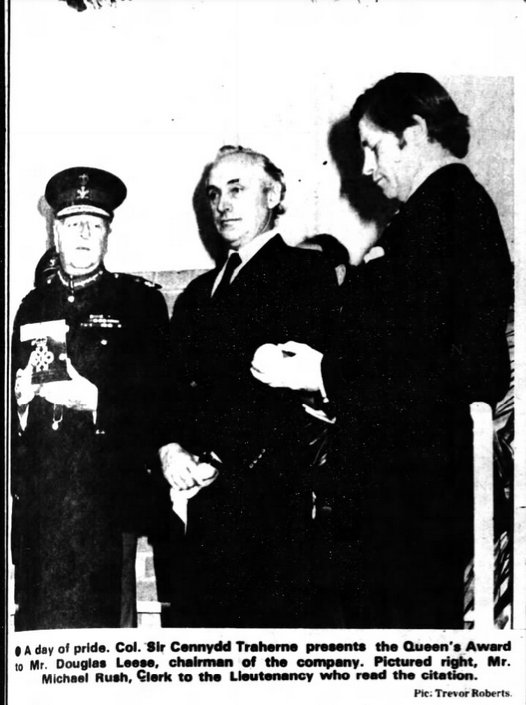
I’m intrigued. Who is Douglas Leese, exactly?
A “flamboyant” businessman—wealthy enough to have his own fifteenth-century country house, South Wraxall Manor, which is now owned by John Taylor, the heartthrob bassist of Duran Duran.3
Back in the day, The Times tells us, Leese hobnobbed with Donald and Ivana Trump’s bosom chum Adnan Khashoggi,
the billionaire Saudi arms dealer…[Leese’s] name later surfaced in parliament in connection with the record al-Yamamah contract for the sale of British fighter jets to the Royal Saudi Air Force. Douglas Leese was accused of handling secret commissions on behalf of British Aerospace through an offshore bank.
A filing from a separate court case in the U.S. stated: “The nature and extent of Leese’s activities, and his various contacts around the world, involve highly sensitive and confidential information, some of which are believed to be classified by the Department of Defense and other agencies of the United States government.”
It was around this time—that is, the mid-1980s—that Epstein began telling people he worked in intelligence.
Did Leese work in intelligence?
We can’t say for sure. Under British law, Leese would not have been allowed to say if he worked for MI6.
However, Steven Hoffenberg—the fraudster who in 1987 hired Epstein to run his Ponzi scheme operation at Towers Financial, and who served 18 years in federal prison—claimed, after his release, that Leese had recruited Epstein to work for British intelligence.
Hoffenberg’s entire business plan was founded on lies, so take what he says with a grain of salt. But if it’s true…I mean, why would a guy recruit someone to work for British intelligence if he didn’t work for British intelligence himself?
Bigger picture, it seems unlikely that the British government would outsource the brokerage of a major arms deal with Saudi Arabia to a British national who didn’t work for the Secret Intelligence Service.
Was Epstein involved with those big arms deals?
Well, Epstein was working for Douglas Leese, and Douglas Leese was involved with the arms deals. What else would Epstein be doing? Leese didn’t pay him all that money to iron his shirts.
For a more detailed answer, I defer to the intelligence analyst Thomas Hampson:
Yet another indicator that intelligence agencies favored Epstein was the false passport found in his New York mansion when it was searched in 2019, which he apparently kept as a souvenir since it had expired (in addition to being fake). The fake Austrian passport showed Epstein under a different name and with an address in Saudi Arabia. Entrance and exit stamps indicate that the passport was used in the early 1980s and was used in locations that parallel those used to facilitate the Al-Yamamah arms deal.
I can’t imagine Epstein getting a fake passport or using one without official government backing and cover. Intelligence services made counterfeit passports.
Court documents are more explicit about this, refuting Epstein’s claim that he never traveled with the fake passport, only keeping it to show “potential kidnappers, hijackers, or terrorists” while traveling in the Middle East, to conceal his Jewish surname. “In fact, the passport contains numerous ingress and egress stamps, including stamps that reflect use of the passport to enter France, Spain, the United Kingdom, and Saudi Arabia in the 1980s.”
In the Reagan/Thatcher era, the world was not exactly awash with arms dealers reliable enough to broker the Al-Yamamah and Iran-Contra deals. Deals of that size and magnitude required a very specific skill set.
Leese was involved. Khashoggi was involved. Manucher Ghorbanifar, an Iranian arms dealer, is said to have come up with the underlying concept of Iran-Contra.
Why would the arms dealers need Jeffrey Epstein?
Because, as we discussed, Epstein could do one thing better than almost anyone else: hide money. That’s what he specialized in at Bear Stearns. That’s why Ace Greenberg kept him around even after his dust-up with the SEC.

Both Al-Yamamah and Iran-Contra required vast sums of money to move around without detection. At the time, Epstein may well have been the best man in the world at doing that work who wasn’t an organized crime figure.
Too, Leese was “accused of handling secret commissions on behalf of British Aerospace through an offshore bank,” per The Times, which, if true, smacks of Epstein’s involvement.
Could fees from these arms deals have been the initial source of Epstein’s wealth?
Put it this way: Adnan Khashoggi did not become the richest man in the world by selling ladies’ underwear.
But Leese and Epstein had a falling out.
Leese sacked Epstein after he busted him expensing Concorde flights and five-star hotels to his company’s account. Or so the story goes.
“So the story goes?” You don’t think that’s true?
No.
Why not?
Because I don’t think Epstein would have jeopardized his relationship with Leese like that. Nor do I think Leese would have cared that much about Epstein turning in a gaudy expense report.
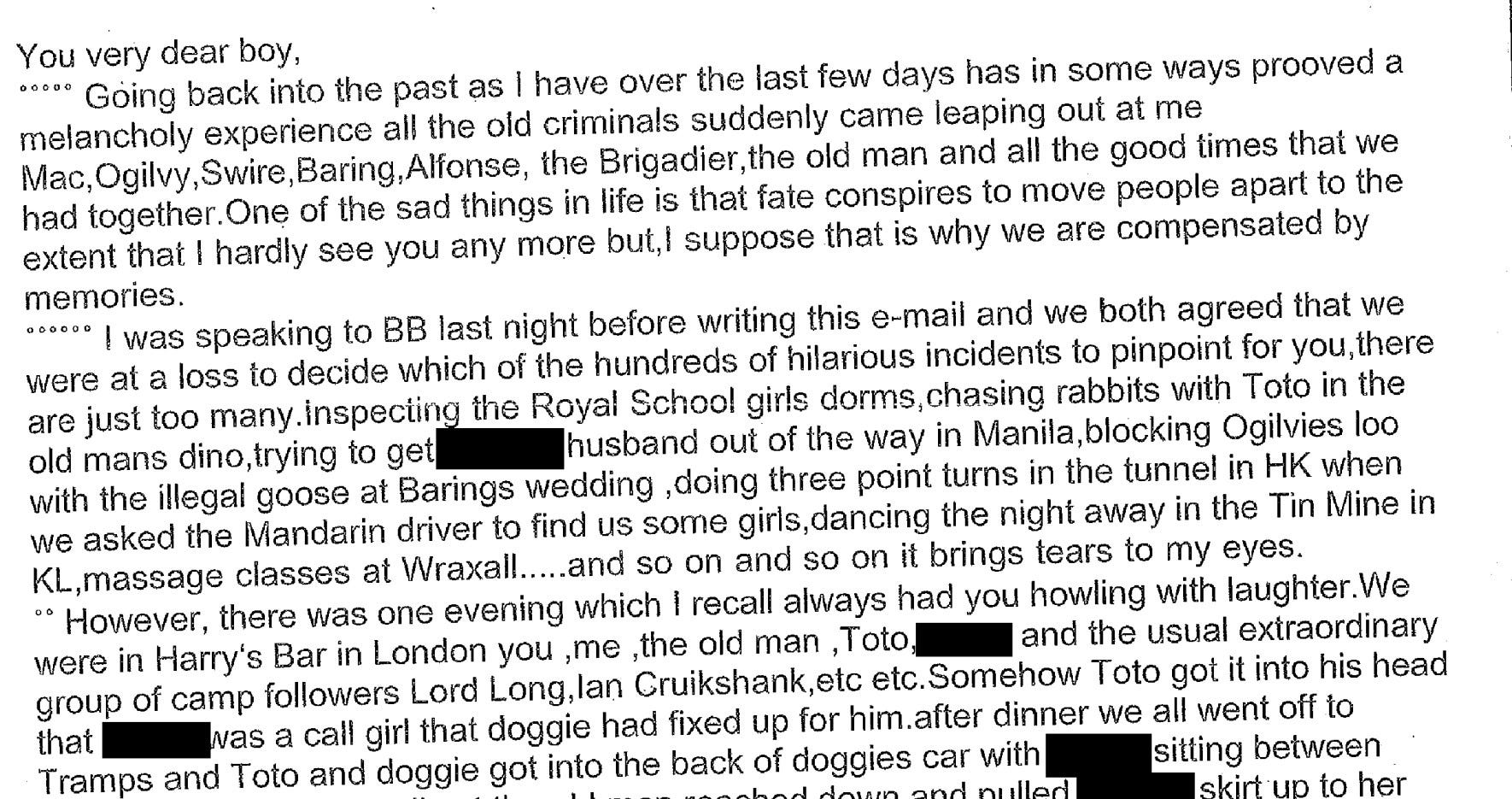
Furthermore, Epstein was still friendly enough with Nick Leese that in 2003, Leese wrote a rather naughty note in the “birthday book”—a distasteful vignette involving his father (called “Doggie”), a Filipino friend of his named Toto, and a woman who was either a high-priced escort, Leese’s mistress, or both:
Finally, it was Leese who recommended Epstein to his next employer, Steven Hoffenberg. According to Hoffenberg, Leese told him Epstein was brilliant and “had no moral compass.”
That doesn’t sound like a “falling out” to me. That sounds like an amicable divorce—or else a cover story for a relationship that never ended. But that’s just me speculating. I have no way of knowing for sure.
It is true that while he was working for Leese, Epstein was also taking on private clients. Turns out, he was not only good at hiding money; he was also good at finding it.
Finding it?
Yes. In the late 80s, Epstein billed himself as a sort of financial bounty hunter.
Did he have any notable clients?
He did indeed! The private investigator Hampson explains:
While all this was going on, Epstein was hired by the famous Spanish actress Ana Obregón to recover millions of dollars of her father’s money that had been lost. Obregón’s father, Antonio Garcia Fernández, had invested heavily in Drysdale Government Securities. The firm collapsed in May 1982 due to fraudulent bond practices. Drysdale’s failure triggered a $300 million loss, putting Fernández’s entire holdings in jeopardy.
To pursue the recovery of Obregón’s money, Epstein hired Robert A. Gold, a former Assistant U.S. Attorney of the Southern District of New York, to partner with him. Gold specialized in securities law, and he had contacts in the Southern District of New York, which was prosecuting the Drysdale fraud. Epstein, using his research abilities, leveraging his contacts, and with the help of Gold and his contacts, the 29-year-old Epstein [sic] engineered the recovery of millions of Obregón’s money.
So at the same time the young Epstein was impressing MI6, the CIA, the Israelis, and everybody else involved in the nefarious transactions that facilitated Al-Yamamah and Iran-Contra arms sales, he was dazzling his famous and very well connected client Ana Obregón, and earning the respect of seasoned attorneys like Gold and of the prosecutors in the Southern District of New York.4
Whoa—that’s a lot of intelligence agencies!
And it’s not even a complete list. You can add Saudi intelligence, because of those arms deals, and, almost certainly, the KGB as well.
Wait—wasn’t Alex Acosta, the U.S. Attorney who brokered the ridiculous 2008 non-prosecution agreement, told to lay off Epstein because he “belonged to intelligence?”
That’s the word on the street, although Acosta remains cagey about the whole thing. He was deposed recently, as part of House Oversight’s Epstein investigation.
It’s a disappointing transcript. Unless my search function is not working properly, not once in the deposition does anyone so much as utter the word “intelligence.” So we still don’t know if anyone actually told Acosta that—and if someone did, we don’t know who it was.
Furthermore, the phrase “belongs to intelligence” doesn’t tell us which country’s intelligence agency Epstein might have belonged to.
Is that last sentence a joke?
Only if you think it’s funny.
The Israelis were involved in Iran-Contra?
Intimately. Brown University’s “Understanding the Iran-Contra Affairs” website offers a helpful explainer:
In 1985, Ghorbanifar and Khashoggi came into contact in Hamburg, Germany, and began devising the skeletons of the plan that would eventually become the Iran side of the Iran/Contra Affairs. Three Israelis were drawn into the discussion in the summer of 1985. A number of stories exist regarding the exact time, place, and specifics of these meetings. However, from these meetings came the idea to sell U.S. arms to Iran via Israel and the suggestion that, to gain the U.S.’s approval for the scheme, American hostages in Lebanon could be released. At the same time this was happening, the NSC was searching for new ways to deal with Iran.
If Epstein was involved with Iran-Contra, he must have been liaising with Israeli intelligence—specifically, the Military Intelligence Directorate, or AMAN. That’s the intelligence arm of the IDF.
[pause]
Aren’t you going to ask me who the head of AMAN was from 1983-85?
Okay, I’ll bite. Who was the head of AMAN from 1983-1985?
Ehud Barak.
The former Prime Minister?
Bingo! Barak looks like a poli-sci professor now, but he was a badass who served for decades in the IDF.
He and Epstein invested in an Israeli start-up company in 2015, after he left public service. In 2023, The Times of Israel reported:
According to the WSJ’s Wednesday report on the calendar’s contents, Barak visited Epstein about 30 times between 2013 and 2017 at his estates in Florida and New York, including a time in 2014 when the former Israeli premier flew with Epstein on his private aircraft from Palm Beach to Tampa, after which Epstein went on to New York. Barak said his wife and an Israeli security guard were also on that flight. He said he flew with Epstein on his private plans on one other occasion, also with his wife and guards.
According to the report, Barak also met with Epstein monthly for nearly a year, beginning in December 2015.
The meetings came well after Epstein’s 2008-2009 conviction and sentencing for procuring a child for prostitution, but Barak has maintained that he had no knowledge of Epstein’s activities.
Raise your hand if you believe that a former head of state who used to run an Israeli intelligence agency, and who visited Epstein 30 times after the 2008 non-prosecution agreement, had no idea what his buddy was doing with the girls.
Didn’t Virginia Guiffre mention…
A “former Prime Minister” who was so violent with her that she was afraid she might not survive the encounter? A sadist she was so frightened of she declined to name, for fear of reprisal?
She does, on page 360 of Nobody’s Girl:
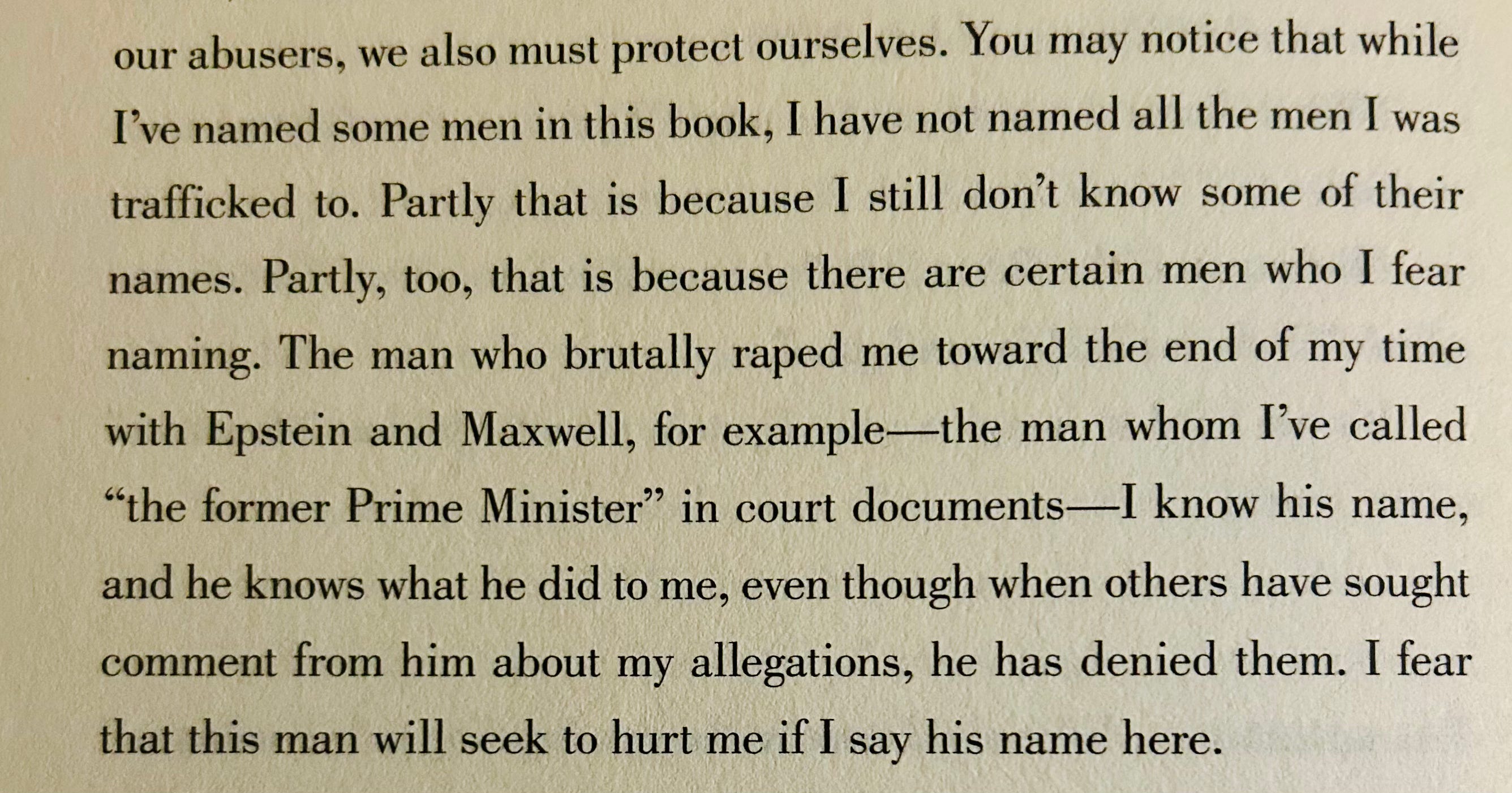
Do you think…?
I’m not saying a word, or implying anything! Barak said he had no idea what Epstein was up to with the girls, and what possible incentive would he have to lie?
I will point out that Barak lost re-election in 2001, whereupon he reportedly came to the United States to work for Electronic Data Systems. Guiffre was with Epstein from 2000 until 2002, and traveled around with him extensively.
But that doesn’t mean Barak is the “former Prime Minister” Guiffre was talking about! There were probably scores of “former Prime Ministers” in Epstein’s inner circle!
Scores of “former Prime Ministers?” Like who? Name one.
Like…um…uh…
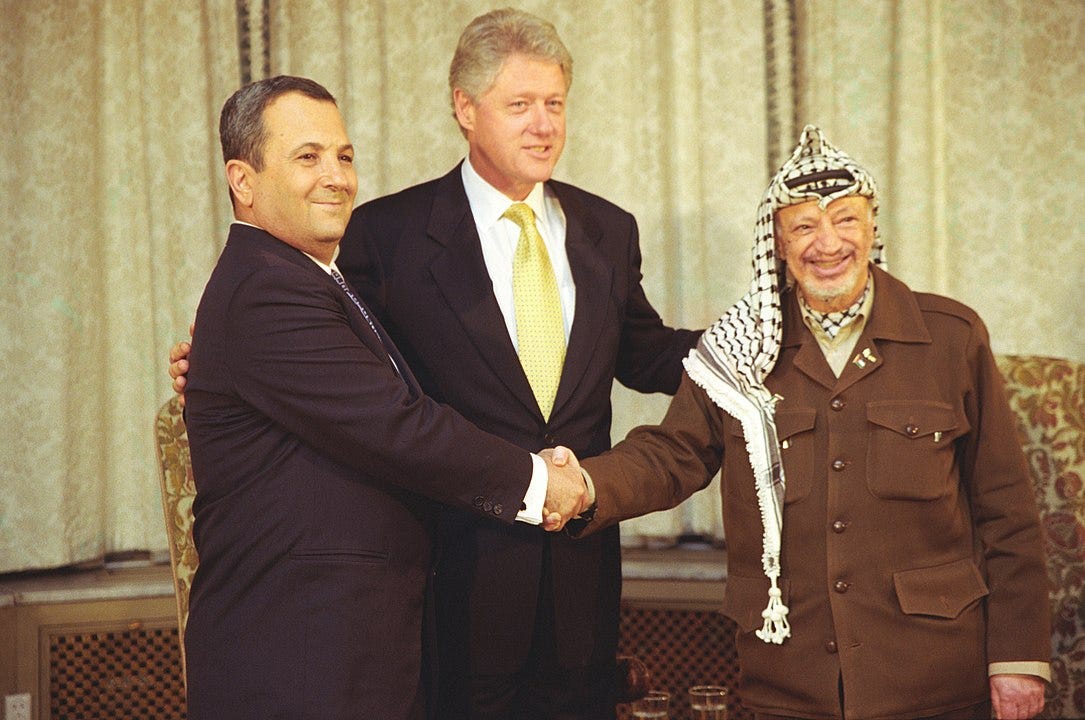
You know what? Let’s just move on—or, rather, move back, to the mid-80s.
You see, there was another notable figure Epstein reportedly did work for at that time. Hampson, the private investigator, explains:
While Epstein was working with Douglas Leese and Adnan Khashoggi, he was introduced to Robert Maxwell. Epstein reportedly helped Maxwell recover and restructure assets tied to Maxwell’s publishing empire, including offshore trusts in Liechtenstein and the Channel Islands.
You really think Epstein knew Robert Maxwell in the 80s?
Absolutely.
Robert Maxwell inserted himself in the middle of everything, and played the various intelligence agencies—MI6, Mossad, the CIA, and the KGB—off one another. That was his game. He swam in the same pool with Khashoggi and the other arms dealers. He was also, through his activities with the Russian mobster Semion Mogilevich in Communist Bulgaria, a pioneer in offshores and money laundering.
In the 80s, Epstein was working for a British arms dealer who allegedly recruited him for MI6. His specialty, as we have seen, was offshores—the exact same financial shenanigans Maxwell was involved with.
How many people were cavorting with arms dealers and British intelligence and setting up offshores in the 1980s? A dozen? Two dozen? What are the chances that their paths never crossed?
Think of it this way: A major league baseball team has 26 players on its active roster. Robert Maxwell and Jeffrey Epstein not knowing each other in 1985 is about as likely as Babe Ruth and Lou Gehrig not knowing each other in 1927.
Not only that, but I believe Robert Maxwell was the template for what Epstein wanted to become.
But Ghislaine Maxwell told Todd Blanche that her father never knew Epstein.
That’s right, she did. She also said that she met Epstein for the first time in 1991:
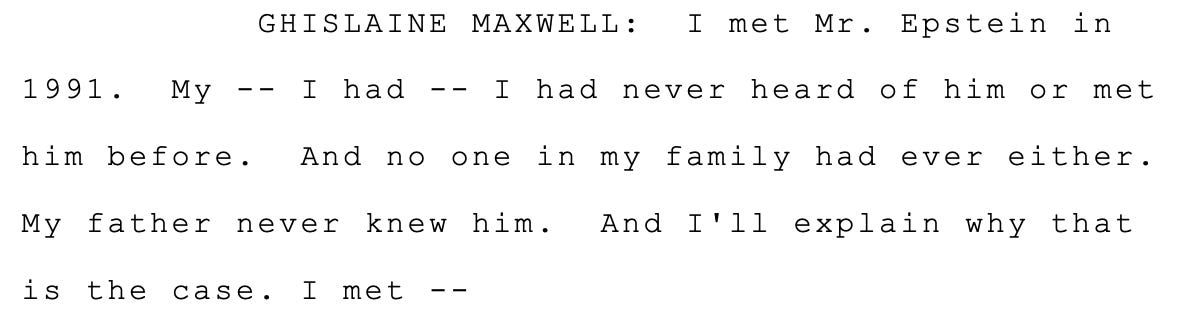
And you think Ghislaine’s lying?
It is my personal opinion that she is full of shit, yes.
Yeah, but, I mean, she would remember when she met Epstein for the first time.
This is a woman who routinely committed perjury. Routinely.
We’ve already discussed how her father and Epstein must have known each other. So that bit about her dad not knowing Epstein seems to me to be a lie—and one she offered up herself, without prompting.
Now, the Jeffrey/Ghislaine relationship may have started in 1991. But I believe—and again, this is just my opinion—that they met previously.
Why do you think Ghislaine and Jeffrey met prior to 1991?
Because Epstein’s old Bear Stearns crony Elliot Wolk said so in the “birthday book:”
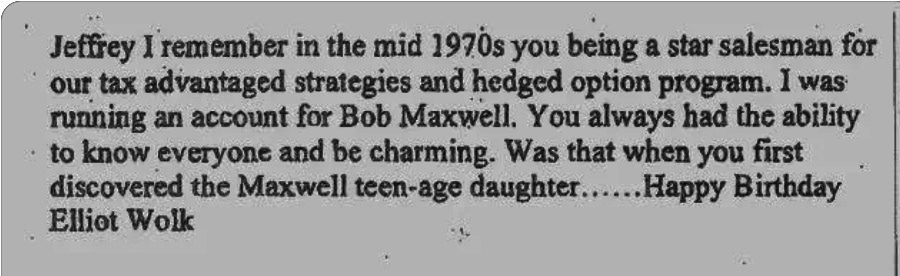
That note—which was written in 2003, when no one involved thought this would matter at all two-plus decades in the future, and therefore had no reason to lie—strongly suggests a mutual familiarity with Robert Maxwell, and implies that Epstein made the acquaintance of “the Maxwell teen-age daughter” long before 1991.
You said something before about the Channel Islands. What are the Channel Islands?
Channel, as in English Channel. Islands, as in an archipelago off the coast of France. These are the islands William the Conqueror, the Duke of Normandy, brought with him when he invaded England in 1066.
Jersey and Guernsey are the two important ones—the Crown Dependencies.
What is a Crown Dependency?
One of three island territories—the Isle of Man is the third—ruled by the King but not formally part of the United Kingdom.
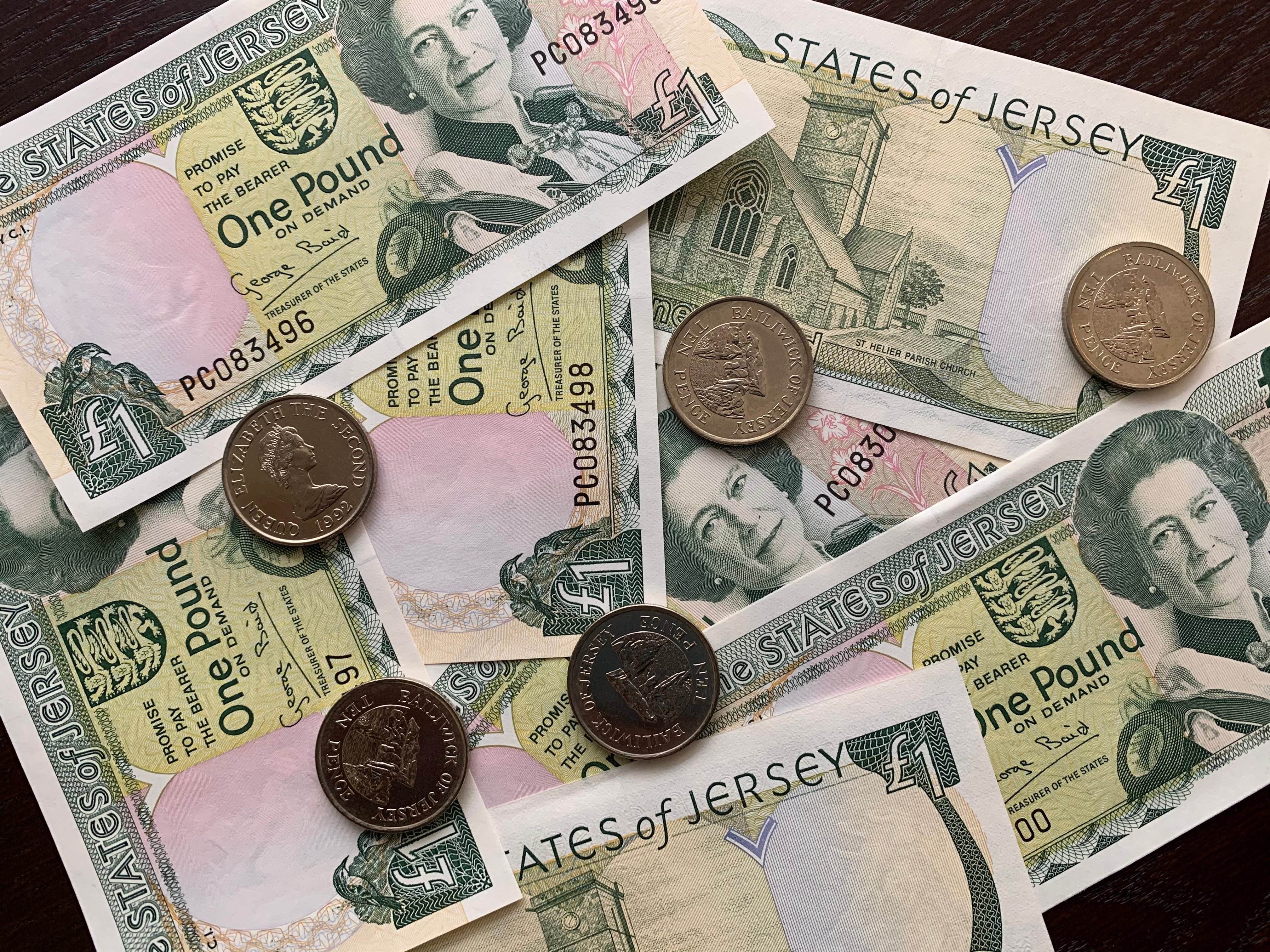
Jersey, in particular, is famously a hotbed of financial chicanery—one of the first places in the world to actively cultivate offshore business.
My friend Stuart Syvret, a native of Jersey and a former Senator there, who ran afoul of the ruling elites when he dared to investigate a child sex scandal, describes the political system on the island as an absolute monarchy. As I wrote back in 2021, when I had him as a guest on the PREVAIL podcast:5
Syvret was responsible for Jersey’s equivalent of Child Protective Services. It was in that post, while filling those responsibilities, that he became aware of a rampant child sex scandal involving the island’s orphanages. He spoke out about the horrific abuses he’d uncovered—and was promptly silenced by the Senate. Rather than confront a problem as ugly as it was insidious, Jersey’s ruling elites bent over backwards to cover up the scandal, going so far as to have Syvret arrested, three times, on cooked-up charges. Unlike political prisoners anywhere else in the Western world, Syvret was denied legal representation.
There’s so much money sloshing through the system there that Jersey is nicknamed “the Trillion Dollar Island.” As I wrote five years ago, back when Charles III was still the Prince of Wales:
Blended in with outsized corporate earnings, the filthy lucre of IRS-averse billionaires, and dirty rubles sloshing in from Russia, is the wealth of the royal family. The Queen’s personal bank, Coutts, has an active branch in Jersey. So does the dirtiest bank in the world, Deutsche Bank. It’s quite the mix.
So: Jersey is
home to a gigantic child sex scandal involving friends of the royal family,
a notorious tax haven where all manner of shady individuals park their money, and
the site of a branch of an underhanded bank that recently paid a $75 million settlement to the sex abuse survivors.
It has Jeffrey Epstein’s name written all over it.
Wait—the Queen was involved in this?
She had a small fortune parked offshore; her name appears in the Panama Papers. Although I highly doubt she was directly involved.
Then who was directly involved?
I can’t say for certain, but for ten years, from 2001-2011, the Special Representative for International Trade and Investment for UK Trade & Investment was a chap named Andrew Mountbatten-Windsor.
Who?
Prince Andrew.
You mean…?
Yes.
Do we know what Epstein really thought of Prince Andrew?
The Canadian journalist Ian Halperin says that Epstein told him that “[t]he royal family were ‘completely brilliant’ because they were the ‘richest motherfuckers’ in the world, while collecting money from British taxpayers,” The Times reports.
The British historian Andrew Lownie, author of Entitled: The Rise and Fall of the House of York, said that Prince Andrew “was easy prey for a rattlesnake like Epstein.” Epstein, Lownie wrote, “played Andrew. The prince was a useful idiot who gave him respectability, access to political leaders and business opportunities. He found him easy to exploit.”
So the Duke of York was played by the Dude from New York?
I guess? The thing is, Prince Andrew Andrew Mountbatten-Windsor has been living high on the hog, well above his means, for decades now. As Rob Evans of The Guardian wrote in October:
How on earth does Prince Andrew fund his lifestyle?
This is a man who has lived a life of luxury for decades, been an outcast for years because of his association with Jeffrey Epstein, yet has no visible means of financial support.
Even King Charles is said to be unsure about some of the sources of his brother’s income, particularly how he finds the significant sums of money needed to afford the upkeep of his home, the 30-room Royal Lodge.
The disgraced prince has been able to keep his financial affairs from the public for years through a mixture of the traditional secrecy which envelops the Windsors and the confidentiality of his dealings with wealthy, mainly foreign, people.
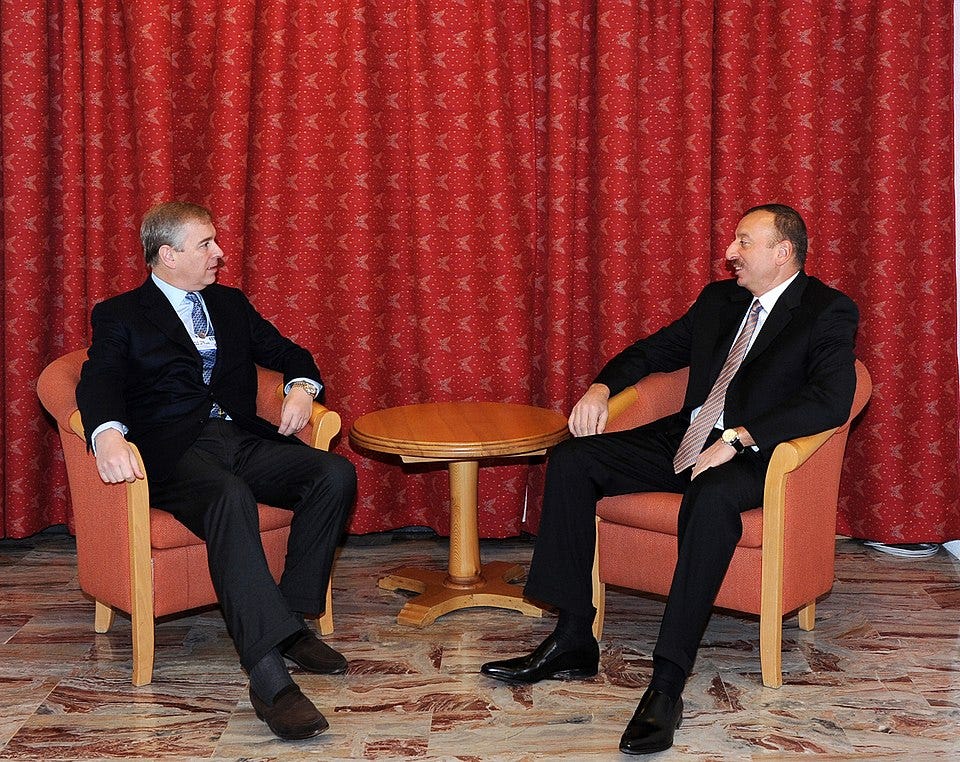
In addition to Jeffrey Epstein, those “wealthy, mainly foreign, people” include a Libyan warlord, a Tunisian despot, a well-heeled relative of a Kazakh strongman, and the autocratic president of Azerbaijan.
So in the Andy/Jeffrey relationship, I’m not sure who was “playing” whom. I don’t think Andy is some rube—or a useful idiot, tempting as it is to cast the world’s sweatiest nepo baby in that light. He may not have had his finger on the pulse of the common man, but he knew what was going down with his mommy’s money.
Why do you say that?
Back in 2008, while his buddy Epstein was in hot water in Palm Beach, Andrew went to some international business function and behaved like a total…can I say the c-word if I’m describing a British man? Better not risk it...he behaved like a total dick.
According to a secret cable written by the U.S. Ambassador to Kyrgyzstan, and released via Wikileaks, the Prince “railed at British anticorruption investigators, who had had the ‘idiocy’ of almost scuttling the al-Yamama [sic] deal with Saudi Arabia.”
This was in reference to “an investigation,” the cable says, “subsequently closed, into alleged kickbacks a senior Saudi royal had received in exchange for the multi-year, lucrative BAE Systems contract to provide equipment and training to Saudi security forces.”
And then: “His mother’s subjects seated around the table roared their approval. He then went on to [denounce] ‘these (expletive) journalists, especially from the National [sic] Guardian, who poke their noses everywhere’ and (presumably) make it harder for British businessmen to do business. The crowd practically clapped.”
BAE Systems? What’s that?
That’s the company formed by British Aerospace after a 1999 merger.
Hang on…wasn’t Douglas Leese “accused of handling secret commissions on behalf of British Aerospace through an offshore bank?”
Yes. Yes, he was.
Was Prince Andrew also involved with that?
I have no idea. But that’s pretty clearly what he was referencing at that business event.
When did Epstein and Prince Andrew meet?
In 1999, via Ghislaine Maxwell—supposedly. She’s known Andy her whole life, pretty much.
Supposedly?
It’s certainly possible, as Andrew wasn’t a key player in the Crown’s finances until 2001. Even so, I don’t necessarily trust the “official” timelines.
Epstein told Halperin, the Canadian journalist, that he’d met Queen Elizabeth and introduced Princess Diana to Dodi Fayed. Those grandiose claims seem ridiculous at first blush, until we recall that Epstein was helping Douglas Leese move money around during Al-Yamamah, and also allegedly setting up offshores in Jersey and Guernsey for Robert Maxwell. Plus, Dodi Fayed was the nephew of Adnan Khashoggi, Epstein’s acquaintance and, allegedly, one of his clients.
Epstein was a legendary bullshitter, to be sure. But it’s not impossible.
And we know Robert Maxwell was on friendly terms with Queen Elizabeth.
Correct. There are pictures of them together from the 70s and 80s. He’s actually touching her.
How did Robert Maxwell meet, and become friendly with, the Queen?
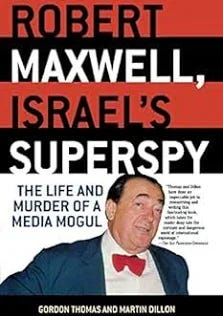
No one knows. I just read an extremely well-sourced and riveting book by Gordon Thomas and Martin Dillon called Robert Maxwell, Israel’s Superspy: The Life and Murder of a Media Mogul. There’s all kinds of great material in that book. But not once do they mention Maxwell’s relationship with the Queen. Most curious.
Had Epstein met Les Wexner by the end of the 80s?
Yes. As Wexner himself recalls:
I first met Mr. Epstein in the mid-1980s, through friends who vouched for and recommended him as a knowledgeable financial professional. Mr. Epstein represented that he had various well-known and respected individuals both as his financial clients and in his inner circle. Based on positive reports from several friends, and on my initial dealings with him, I believed I could trust him.
Eventually, he took over managing my personal finances. He was given power of attorney as is common in that context, and he had wide latitude to act on my behalf with respect to my personal finances while I focused on building my company and undertaking philanthropic efforts.
But that doesn’t mean Wexner “made” him. Not at all. I get that the Victoria’s Secret magnate has long been pegged as the original source of Epstein’s wealth. But the truth is, Epstein was already rich and extremely well-connected before he started working for Les Wexner.
Is Wexner correct when he says granting power of attorney is common in that kind of arrangement?
As I understand it—with the caveat that this is not my area of expertise—yes.
Remember what Brooke Harrington writes in Offshore: the ultra-wealthy don’t do anything for themselves—especially manage their vast fortunes. People are baffled by the POA thing, but I think it’s one of the least weird things about Jeffrey Epstein. Wexner is worth something like $9 billion. He didn’t need to manage it all himself; it’s not like he wasn’t going to go broke. He wanted to focus on other things, which I totally understand.
People are also baffled at why Wexner—and, later, Leon Black—kept Epstein on for so long, even after it became dodgy to do so. Harrington has an answer for this, too:
Many of the ultra-wealthy harbor politically sensitive, potentially explosive secrets of a financial, legal, and personal nature. As one Swiss wealth manager I interviewed put it, clients must metaphorically “undress in front of you,” because all their most private information affects their fortunes and the legal-financial strategies needed to protect them. Finding wealth managers who can be trusted with such information is a lengthy and fraught process. Another wealth manager I interviewed recounted, “One of my client said to me after years working with him, ‘You know I can’t sack you now. You know where everything is, you know everything about me.’” ….
In the world of offshore finance, trust is not a commodity and cannot be purchased easily from another provider.
So once you decide on a wealth manager…
It’s easier to divorce your wife than fire them.
When did Wexner give Epstein power of attorney?
In 1991.
Huh. Nineteen ninety-one seems like a big year in this story.
Yes. In 1991 Robert Maxwell falls—or has his corpulent corpse pushed—off his yacht, the Lady Ghislaine. The actual Lady Ghislaine shows up to meet the press, tells them she thinks her father was murdered. Then she relocates to NYC, where she takes up with Epstein, whom Wexner has just given power of attorney. (He’s not living in Wexner’s mansion yet; he’s renting out the old Iranian Embassy.)
That year also marks the end of a chapter.6
The end of a chapter?
For a long time, Epstein maintained “normal” romantic relationships. He dated Eva Anderson, the Swedish model, off and on for 11 years in the 1980s—and he was friends with her for years after they broke up, even after she married his pal Glenn Dubin.
With that said, he was always a creep, always had a perverted attraction to girls, and was allegedly abusing women as early as 1985. He was accused of sexually abusing a 13-year-old girl in 1990.
But the child sex trafficking? That didn’t begin until Ghislaine Maxwell came along.
There were other changes, too, as the private investigator Hampson lays out:
When Ghislaine became involved with Epstein, there was a dramatic shift in Epstein’s method of operation. He changed:
from attending parties to hosting them
from being exclusively involved in relationships with adult women to recruiting young girls for sexual purposes
from having no training for any of his staff to becoming a facilitator orchestrating the grooming and training of underage girls, and girls barely of age, to become sexual companions of powerful men, similar to the training described in the Kama Sutra
from having no surveillance cameras on his properties to having multiple hidden cameras, including in bedrooms and bathrooms
But the big one—let me reiterate—is this: there’s no evidence of Epstein engaging in child sex trafficking before he teamed up with Ghislaine.
Oh man. This has my head spinning.
MEGO, my friend. MEGO.
MEGO?
My Eyes Glazeth Over.
Oh, right.
I propose we call it quits for today, and continue our Q&A in a week or two. This thing is almost 6,500 words, and we’ve barely mentioned Donald Trump…
If you have a question for the next Epstein Q&A, please let me know, and I will try to address it. Email gregolear at substack dot com, subject “Epstein FAQ.”
Photo credit: Top photo and Jersey photo are by me.
As anyone who watches The Five 8 or follows her on Twitter knows, my friend and co-host Stephanie Koff has been saying this for years.
Speaking of Reddit…Ghislaine Maxwell was a prolific user of that site, posting more than almost anyone else in the early years especially.
Taylor is the second member of my favorite band to have some connection, however tenuous, with Epstein; Simon Le Bon is listed in Epstein’s “black book” (and denies ever meeting him).
Hampson posits that Epstein leaned on his relationship with Gold and SDNY to avoid prosecution in the Towers Financial affair.
Fun fact: It was for that episode that I created the character of Nunzio Cicarelli, President of the Bank of the Badda Bing, to bring together the two Jerseys.
My first novel, Totally Killer, is set in 1991. Robert Maxwell appears in it.
"The money thing" continues to protect the super-rich perverts. And you can bet the more rich people threatened, the more ruthless they will become
So many questions and answers that lead to more questions and answers! Maybe R.Maxwell trafficked his daughter and She came up with the idea of all the cameras and the girls? Excellent work as usual Greg. Look forward to the next chapter.