

The Epstein Files
An index of PREVAIL's extensive coverage of Jeffrey Epstein, Ghislaine Maxwell, Donald Trump, and the most notorious child sex trafficking operation in recent memory.
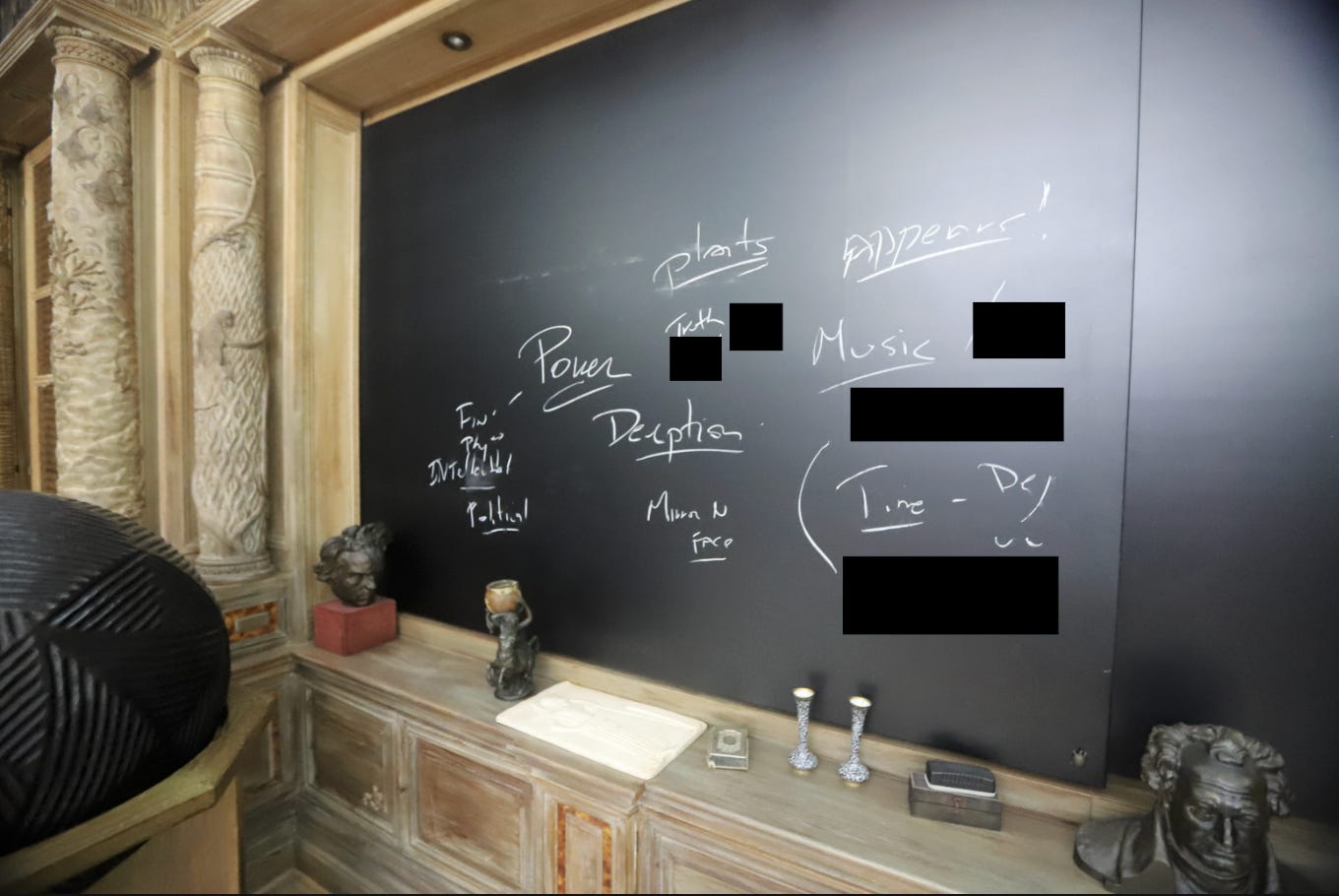

A tale of princes, presidents, and predators.
We’ve seen characters like this before. They are uncommon but not unheard of. They emerge out of nowhere and Tom Ripley their way into the highest strata of society. They speak into existence their own importance. They are relentless in their quest for fame and fortune and power. They collect influential friends and amass vast wealth, for sport. Their background doesn’t check out, but no one seems to mind as long as the checks clear and the champagne flows. And then, one day, inevitably, it all comes crashing down.
Jay Gatsby is one such character. He came from nothing, traveled abroad, cavorted with criminals, built a fortune, went to great lengths to conceal the humble details of his past. He was decadent, but his tastes ran to the nouveau riche. He was interested only in himself. He believed the rules did not apply to him. He could be generous and charming, but beneath the veneer of old-sport respectability was insecurity, self-loathing, and rage. He lived the American dream and the American nightmare. He died a violent death. Gatsby is fictitious, of course, but the elements are all the same—and isn’t much of Epstein’s story also a work of fiction?
Epstein is a real-life Gatsby, but a poisoned Gatsby, a Daisyless Gatsby, a Gatsby without the green light, a Gatsby from hell. He is a magic trick inverted. Now you don’t see him, now you do. One day he’s just there, in the thick of it all, possessor of an opulent Upper East Side townhouse, the most expensive residence in all of Gotham. He could not have acquired such a signature property if he was not rich. That’s what everyone thinks, at least. That’s the rationale. If he lives there, he must be legit. Money can’t buy you everything, but it can certainly bring you the benefit of the doubt.
Rumors fly, but as with Gatsby, the rumors are little more than speculation. He’ a financier, is what the papers say. He must be very good at whatever it is he does. He must know how to play the markets. He must know how to invest. He must have the wealthiest clients in the world. He must be a magician with money. Rabbit from a hat. Now you don’t see it, now you do.
Even now, we don’t fully know the origin of the money. Was he the beneficiary of the largesse of his earliest patron, the garment industry magnate? Was he a new-wave Meyer Lansky, laundering vast sums for organized crime? Was he an arms dealer—or rather, a broker between arms buyers and arms sellers, a conduit to move money without detection? Was he a modern-day pirate, his entire fortune purloined from some secret CIA slush fund? We don’t really know. We may never know.
We do know about the posh mansion at 9 East 71st Street, just off Central Park, same neighborhood as Woody Allen and Bill Cosby. The townhouse is, essentially, a gift from the garment industry magnate: the underwear mogul, destroyer of healthy body images, prime mover of the insidious trend of female models to look less like voluptuous adult women and more like prepubescent boys. He and the garment industry magnate are close: intimates, some say, the same word used to describe the slinky wares the garment industry magnate has on offer. Pretty underage girls admire the young women (who look like younger boys) who model the underwear. He uses this as a recruitment tool. I can make you a model for my friend the garment industry magnate. I can make you famous. In the early years, the clumsy years, this is how he operates. He makes promises he has no intention of keeping.
He develops a persona. He hides behind a cloak of money and mystery. He eschews suits and ties for more casual clothes. He cultivates friendships with high-powered individuals at the top of their fields: scientists, attorneys, politicians, actors, writers. He throws dinner parties, salons really, where these individuals can meet and talk shop. The conversations are stimulating. That’s his primary function: to bring interesting people together and make everything stimulating.
The socialite, so-called, is on hand for most of these parties. She is with him all the time, but the nature of their relationship is hard to define. Are they boyfriend and girlfriend? Business partners? Just close friends? Journalists can’t decide, and no one cares enough to press the issue.
There are rumors, but the rumors are mostly speculation. He likes the rumors. The rumors cultivate mystique. There were rumors about Gatsby, too. They say he killed a man. What he will wind up doing is much, much worse, and can’t be articulated so simply.

A survey of the rich & powerful individuals who elevated Jeffrey Epstein, hired him, funded him, enabled him, befriended him, and/or partook of his services.
Jeffrey Epstein was not a self-made man. His success, especially in the early days, depended on the largesse of the rich and powerful men and women with whom he curried favor. He was an opportunist. His genius, if we can call it that, lay in cultivating and leveraging relationships with important people, both in the United States and around the world. He made himself indispensable to these individuals.
Along the way, he invented his own mythology. Epstein the genius. Epstein the intellectually curious. Epstein the financial wizard. All carefully crafted mythos. All bullshit.
Below is the real “Epstein list.” Not the men accused of raping and sexually abusing the girls trafficked by him and Ghislaine Maxwell—although there may well be a significant overlap on that odious Venn diagram. Here is a list, long but hardly exhaustive, of the individuals who elevated him, who hired him, who funded him, who enabled him, who befriended him, who partook of his services, and, in some cases, were his partners in crime.
Let me be clear, right up front, that the inclusion of the names below DOES NOT imply guilt of rape or sexual abuse or any other crime, and should not be construed as such.
With that said, it strains credulity to believe that all of these very smart, very successful, very well-connected people had no inkling of Epstein’s ephebophiliac predilections. Anyone who set foot in his mansion in New York or his house in Palm Beach could see it in the décor. And, like, he called his private jet the “Lolita Express!” None of these Ivy League graduates were familiar with Nabokov?
Epstein hid what he was doing, sure—but not so well that, when he pleaded guilty in 2008, those who knew him were not much surprised. One of his friends even wrote, in the “birthday book” Maxwell put together for his 50th birthday in 2003, a limerick on the subject: “Jeffrey at half a century / with credentials plenipotentiary / though up to no good / whenever he could / has avoided the penitentiary.” That’s nothing but a rhyming version of the old lewd joke that “15 will get you 20.”
How could they not have known? Really—how?
As Annie Farmer, one of Jeffrey’s first known victims, said at the Lawmakers and Epstein Survivors Press Conference last week, “For so many years, it felt like Epstein’s criminal behavior was an open secret. Not only did many others participate in the abuse, it is clear that many were aware of his interest in girls and very young women and chose to look the other way because it benefited them to do so. They wanted access to his circle and his money.”
Eternal shame on everyone who participated in this evil—or who looked the other way.
Ramble On: “The Epstein Files,” Season Finale
November 15, 2025
What will the release of the Epstein files reveal? What surprises might we be in store for? Here are some possibilities.

The first installment of a mammoth Epstein Q&A, featuring Ghislaine Maxwell, Douglas Leese, Adnan Khashoggi, Robert Maxwell, Ehud Barak, Prince Andrew, Les Wexner, and much more.
Jeffrey Epstein is unknowable—by design.
Unlike the bombastic Robert Maxwell, his model if not his mentor, Epstein kept a low profile. For decades, none of us peasants had ever heard of him—and if we had, he was yet another reclusive “financier,” indistinguishable from the other eccentric UHNWIs who live in those Bruce Wayne mansions on Billionaire’s Row.
If not for Virginia Guiffre and the other survivors; the indefatigable Miami Herald reporter Julie K. Brown; and, of course, Donald Trump (basically the schmuck in Goodfellas who after being expressly warned not to flash his money after the Lufthansa heist bought the pink Cadillac and the fur coats), would we even be aware of Epstein’s existence?
For decades, the press all but ignored him. There was the “Bachelor of the Year” snippet in Cosmopolitan in 1980, the Landon Thomas Jr. feature in New York magazine in 2002 (Trump: “He’s a lot of fun to be with. It is even said that he likes beautiful women as much as I do, and many of them are on the younger side.”), and a year later, Vicky Ward’s “The Talented Mr. Epstein” profile for Vanity Fair—shorn, at the eleventh hour, and over her vehement objections, of the bit about Epstein’s sexual abuse of the Farmer sisters, ostensibly because her editor didn’t think it was “earth-shattering” that Epstein was sexually abusing a 16-year-old.
Aside from the occasional mention in the New York tabloids, usually citing Epstein’s proximity to Bill Clinton or Trump, that was about it. There was so little about him in print that the Palm Beach Post reporter filing the July 2006 news story about his indictment for solicitation got him mixed up with another Jeffrey Epstein—one who wrote bad checks.
Even now, after God knows how many articles and podcasts and Michael Wolff media hits, what do we really know about Jeffrey Epstein? What can we say for certain?
For many years, he and Ghislaine Maxwell ran an industrial-scale child sex trafficking operation.
He was the “closest friend” of Donald Trump, who is currently moving heaven and earth to keep his activities with Epstein under wraps.
His name was on JPMorgan Chase’s “Wall of Cash,” because he made the firm so much money.
There were over a billion dollars’ worth of suspicious transactions on his accounts at JPMorgan Chase—and that was only one of the banks he regularly used.
Dozens upon dozens of rich and powerful people—among them Larry Summers, Alan Dershowitz, Bill Gates, Peter Thiel, Steve Bannon, Kathryn Ruemmler, and Jes Staley—remained in close contact with him, well after his monstrous sex crimes became impossible to claim ignorance of.
Most of the rich and famous people in his orbit did not participate in sex crimes—as far as we know.
The child sex trafficking operation is so abominable, so unthinkably awful—and, critically, so well documented by the accounts of so many survivors—that it demands the lion’s share of the media’s attention. And rightly so. Release the files! Expose every last one of those monsters!
But for Epstein—and this is painful to write and ugly to contemplate—the sex trafficking was a sideline from his core business. Because there’s one more thing we know for certain about Jeffrey Epstein:
Sometime between 1981, when he left Bear Stearns, and 1991, when he joined forces with Ghislaine Maxwell, Epstein went from being a rich dude to a wealthy dude. He leveled up.
Graydon Carter, Vicky Ward’s then-editor at Vanity Fair, justified the excision of the Farmer sex abuse allegations in that 2003 feature by telling her, “I think the money thing is more interesting.”
The money thing is not more interesting. The money thing, on the contrary, is intentionally boring. Half the reason offshores are so hard to unravel is because tracking shell company upon shell company upon shell company in tax haven upon tax haven upon tax haven is mind-numbingly dull. As the sociologist Brooke Harrington reports in her excellent book Offshore: Stealth Wealth and the New Colonialism, “Even those who do specialize in this system sometimes use the term MEGO (My Eyes Glazeth Over) to describe it.”
So no, the money thing is not more interesting. But it is more important to understanding what Jeffrey Epstein really was.

The second installment of a mammoth Epstein Q&A, featuring Ghislaine Maxwell, Robert Maxwell, Semion Mogilevich, Bill Barr, Donald Barr, Les Wexner, Melania Trump, Jean-Luc Brunel, and much more.
Speaking of Robert Maxwell—if Ghislaine has some financial stake in CargoMetrics, it would not be the first time that a Maxwell family member made money from cutting-edge computer software that would be of interest to foreign intelligence agencies, organized crime syndicates, and terrorist groups.
Oh?
As Gordon Thomas and Martin Dillon extensively cover in Robert Maxwell: Israel’s Superspy, her father, Robert Maxwell, was the exclusive salesman for PROMIS, a cutting-edge spy software.2 This represented a sizable chunk of his income during the 1980s, the authors suggest.
Originally developed in the 70s for the Justice Department to integrate cases in the byzantine U.S. legal system, the software was purloined by Mossad, souped up, repurposed, fitted with a “backdoor,” and made available to Maxwell’s various and sundry contacts in the foreign intelligence services. In time, all of those spy networks ran PROMIS. (Mustn’t have a Cutting-Edge Spy Software Gap!)
But Robert Maxwell didn’t limit himself to spooks. As Thomas and Dillon explain,
In October 2001, a month after the destruction of the Twin Towers in New York and the attack on the Pentagon in Washington by al-Qaeda suicide bombers, it emerged that the man who controlled them, Osama bin Laden, had acquired a copy of the still highly secret PROMIS software.
The version of PROMIS provided to bin Laden came from a former FBI agent, Robert Hanssen. For years he had been a Russian spy inside the FBI. He had passed over the latest version of PROMIS to his handlers in Moscow. They had sold on a copy to Simeon Mogilevich for a reputed sum of $3 million. He had sold it on to bin Laden for an undisclosed price.
….
As Gail Kligman, a professor of Sociology and Director Designate of the Center for European and Eurasian Studies at UCLA, noted in a talk in 2005:
The collapse of communism that began in 1989 provided new resources—geographical and human—for the sex trade, increasingly incorporating women from Eastern Europe. One of the most striking images of the changes soon after the fall of the Berlin Wall was that of women lining the highways offering sex for sale. Political and economic liberalization as well as internal and international militarism created new opportunity structures and daunting economic uncertainties that produced both a demand for and a supply of sex workers in and from Eastern Europe. Most of these sex workers have been and are women and girls.
Robert Maxwell was, per Superspy, an avid customer in the Bulgarian sex trade on his frequent visits to Sofia. As I mentioned, one of his business partners in the years before his death in 1991 was Semion Mogilevich—who, as the FBI explains (boldface mine),
has been a transnational organized crime boss active for many years operating from Russia and various other countries. In 1995, the Russian Ministry of the Interior (MVD) identified Mogilevich as the boss of more than 300 criminal associates operating in more than thirty countries in Europe, Asia, and North America. Mogilevich’s criminal organization engaged in a wide variety of criminal activity, included murder, extortion, trafficking in women for prostitution, weapons trafficking, money laundering, bank and securities fraud, and, in numerous countries, the corruption of public officials.
Was Robert Maxwell’s involvement with Eastern European prostitutes not confined to his own personal pleasure? Was he also part of the Mogilevich sex trafficking operation? And if so, was his (hypothetical) stake in that sex trafficking operation Ghislaine’s real inheritance?
In other words, was the Epstein/GMax sex trafficking operation just an extension of a potential Mogilevich/RMax sex trafficking operation? And if so, might that have been a major source of Epstein’s income?
Because, again: there’s no evidence of Epstein engaging in child sex trafficking before he teamed up with Ghislaine.

The third installment of a mammoth Epstein Q&A, featuring new Oversight photos, Russians, scientists, lawyers, bankers, properties—and, perhaps, an heir apparent
Was Epstein working for the Russians?
Jeffrey Epstein worked with the Russians, for sure. He wasn’t working for them. He also worked with the Israelis—specifically AMAN, the military intelligence unit once headed by his old chum Ehud Barak. But he wasn’t working for them. Nor was he working for MI6, or the Saudis, or the CIA (despite what he was telling women back in the 80s). I don’t think he had any allegiance to any one country, intelligence service, or person—other than himself.
Jeffrey Epstein was working for Jeffrey Epstein, just like Robert Maxwell was working for Robert Maxwell.

The fourth & final installment of a mammoth Epstein Q&A, in which we ask: Why won’t Trump release the Epstein files? What’s he so afraid of? What could possibly be worse than what we already know?
We already know Trump is a serial sexual assailant. We know he’s an adjudicated rapist. We know he’s a felon, convicted on 34 counts. We know he’s a Kremlin stooge. We know he launders money for the Russian mob. We know he comes from the world of organized crime. We know he’s a rat.
We know he was best buddies with Epstein for at least a decade and a half—that he partied with him and shared an interest in underaged girls. We know he allowed Epstein and GMax to “steal”—his word—girls from Mar-a-Lago for them to traffic and rape.
We know all of that already. None of it has moved the needle. Part of the White House has fallen, but Trump remains.
We also know that whatever’s in the Epstein files is very very very bad—worse than any of the stuff we already know. That’s been trickling out in reporting by David Shuster and Allison Gill, among others.
We know there’s a push within the Bureau to disclose what’s in those files. We know this because Jason Leopold’s FOIA request about the FBI’s review and redaction of the Epstein files was cranked out in record time; it can take many months, and sometimes years, to get replies to FOIA requests, and many of them bring back little of value. Leopold got this one back in a matter of weeks, and it was enlightening.
Finally, we know that Donald Trump never wants the Epstein files to see the light of day. He’s genuinely terrified that what’s contained there will end his presidency. Why else would his lickspittle Kash Patel authorize $851,344 in overtime for FBI agents to redact Donald’s name from the documents?
So the question we have to ask ourselves is, hypothetically speaking, what could possibly be worse—I mean, like, orders of magnitude more damning—than what we already know? Because what we already know is awful.

Morning thoughts on Epstein, Trump, banks, banking, financial scandals, and following the money

The dark ecosystem that created both Donald and Jeffrey: A conversation with Stephanie Koff about the world beneath.

Stephanie Koff, Jen Taub and I get to the bottom of the Epstein mysteries: his start with the intelligence services, the hidden meaning behind the email exchanges, Bubba, and much more.


Child sex trafficking networks can’t operate without money. Epstein’s financial services were provided by some of the nation’s biggest banks. Here’s 12 things the banks teach us about Jeffrey Epstein.
The last time Mike Johnson, the Speaker [sic] of the House, spoke to Democrats about ending the government shutdown was on October 8—almost three full weeks ago. Since then, he has appeared many times on TV, lying so shamelessly, so egregiously, and so gleefully about his motives for grinding the legislature to a halt that you half expect the God he claims to worship to turn him into a pillar of salt.
One must be gullible’s-not-in-the-dictionary-level naïve, willfully ignorant, or actively stupid to believe that Johnson’s obdurate refusal to re-convene the House—with funding for SNAP benefits ending on Saturday! with American families preparing to starve!—is not related to the impending vote on the discharge petition to release the files related to the late child sex trafficker and so-called “financier” Jeffrey Epstein.
Let me put that more succinctly: At Trump’s behest, Mike Johnson has shut down the entire House of Representatives, during a moment of national crisis, rather than risk allowing the Epstein documents to come out. A recent former GOP Speaker is literally a convicted pedophile, yet somehow the current Speaker is even more all-in on covering up pedophilia.
Donald Trump is so confident in his own political impenetrability that he’s reduced the East Wing of the White House to rubble—but the release of the Epstein files scares the shit out of him, so much so that he is considering granting a pardon to Epstein’s partner in crime, Ghislaine Maxwell.
Words fail to describe how bat-shit this all is.
The day after that last meeting between Johnson and Senate Democrats, Rep. Jamie Raskin (D-Maryland), in his capacity as Ranking Member of the House Judiciary Committee, sent letters to four of the nation’s largest banks requesting records related to more than $1.5 billion in suspicious financial transactions flagged by said banks tied to sex trafficking crimes committed by Epstein and Maxwell.
The press release is instructive, and worth reading carefully:
The letters to JPMorgan Chase, Deutsche Bank, Bank of America and Bank of New York Mellon come after Judiciary Republicans blocked Democrats’ attempts to subpoena these records on September 17 during the Committee’s hearing with Federal Bureau of Investigation (FBI) Director Kash Patel. When JPMorgan CEO Jamie Dimon heard of the efforts to seek documents from his bank, he stated that he “regret[s] any association with that man at all,” and that “what happened to those women is terrible.” These letters seek to take Mr. Dimon up on his words of contrition and ensure that JPMorgan, Deutsche Bank, Bank of America, and Bank of New York Mellon help Congress understand how Jeffrey Epstein, Ghislaine Maxwell, and their co-conspirators were able to use their banks to operate their international sex trafficking ring.
Under the Bank Secrecy Act, financial institutions are required to file Suspicious Activity Reports (SARs) within 60 days of detecting transactions that raise red flags. Yet, all four banks with close financial ties to Jeffrey Epstein repeatedly failed to take timely action for years, potentially allowing his criminal activity to remain undetected.
“Financial institutions are often the first line of defense in detecting serious federal crimes, especially the ones that involve significant flows of money like sex trafficking. Flagging and detecting Mr. Epstein’s suspicious withdrawals may well have stopped his crimes years earlier and saved countless girls and women from a fateful interaction with the criminals Epstein and Ghislaine Maxwell and their co-conspirators. If you truly regret JPMorgan’s shameful association with Mr. Epstein, we trust that you will work with us to promptly produce these records and help us ensure that neither your bank nor any other American bank ever again enables and bankrolls a criminal sex trafficking ring like Epstein’s,” wrote Ranking Member Raskin in the letter to JPMorgan.
JP Morgan processed over one billion in suspicious transactions over the course of its fifteen year relationship with Mr. Epstein.
“For over fifteen years, JPMorgan turned a blind eye to evidence of Jeffrey Epstein’s child sex trafficking. Senior executives at your bank helped Mr. Epstein open 134 accounts and processed over one billion dollars in transactions for Mr. Epstein, including after his 2008 conviction for soliciting minors,” wrote Ranking Member Raskin in the letter to JPMorgan.
Most of the coverage on Jeffrey Epstein has focused on his monstrous child sex trafficking operation—and rightly so. It is because of the courage of survivors like Courtney Wild and the late Virginia Guiffre, whose memoir came out last week, that we know as much as we do about his criminal enterprise.
But the child sex trafficking operation could not have run without money—lots of money. During his shadowy career in “finance,” Epstein somehow accumulated a fortune. He owned properties in New York, Paris, Palm Beach, New Mexico, and the U.S. Virgin Islands. He had a private jet. He had wealthy “clients” like Lex Wexner and Leon Black shoveling dough at him.
And, as Raskin’s letter shows, Epstein processed over $1,500,000,000 in transactions his banks flagged as suspicious—that’s more than a billion and a half dollars!—including the withdrawal of vast sums of cash he used to pay off his victims. The numbers boggle the mind, and hint at the scope and scale of the heinous enterprise.
Without the cooperation of his banks, this would not have been possible.
Of the four big banks, JPMorgan Chase is arguably the one with the most skin in the game. During his many years as a top executive with the firm, the disgraced banker James Edward “Jes” Staley, once the presumptive heir apparent to longtime CEO Jamie Dimon, developed what appears to be a close personal friendship with Jeffrey Epstein, which Epstein cultivated and manipulated to his advantage. This, I suspect, is why Dimon is singled out in Raskin’s press release.
In September, a month before Raskin’s letters went out, the veteran journalists David Enrich, Matthew Goldstein, and Jessica Silver-Greenberg—who have been digging into Epstein’s finances for more than half a decade—published a lengthy investigative piece in the New York Times Magazine under the not-so-subtle title, “How JPMorgan Enabled the Crimes of Jeffrey Epstein.” Raskin cites revelations in that article in his letter to Dimon, in which he requests JPMorgan to voluntarily turn over:
All documents and information related to any transaction identified by JPMorgan for further review, inspection, or discussion relating to Jeffrey Epstein, Ghislaine Maxwell, or any of their minor victims, whether or not eventually flagged, raised, or provided to federal regulators in any fashion;
All communications to or from Jes Staley, Mary Erdoes, and Justin Nelson related to Jeffrey Epstein;
All documents and records related to decisions relating to Jeffrey Epstein’s account, including but not limited to any discussions, meetings, or decisions made regarding whether to maintain Mr. Epstein as a client or suspend or cease the banking relationship;
All internal communications within JPMorgan and all affiliated institutions regarding Jeffrey Epstein, including but not limited to his investigation and conviction in 2008, potential institutional risk relating his banking relationship, or other compliance risks;
All internal risk assessments and due diligence reports for all Jeffrey Epstein- or Ghislaine Maxwell-related accounts or transactions; and
All communications with federal regulators or law enforcement agencies regarding Mr. Epstein or Ms. Maxwell from 1998 to present.
Unfortunately, because of the aforementioned pedophilia-simping by Mike Johnson and the other House Republicans, Raskin was unable to subpoena these documents. All he can do is ask nicely and hope for the best; Dimon is at liberty to simply crumple up the letter and toss it in the trash.
While we wait for JPMorgan to produce the requested documents, or Mike Johnson to re-convene the House, or Godot to show up, I thought it would be instructive to comb through the Times article, and other in-depth pieces about Epstein’s finances.
Here are 12 things the banks teach us about Jeffrey Epstein.

Jes Staley, Jeffrey Epstein, and the making of the world’s largest child sex-trafficking enterprise.
Follow the money, and inevitably, you end up at the bank.
In the case of Jeffrey Epstein, that bank, more often than not, is JP Morgan Chase—or “JPEpstein Chase,” as I call it.
Dimon SAR Forever: The “Wall of Cash” Memo
November 21, 2025
JPMorgan Chase is the subject of a damning report by the Senate Finance Committee’s senior investigator, who is looking into the bank’s long & prosperous relationship with Jeffrey Epstein

Musings on Jeffrey Epstein, Donald Trump, Evelyn Nesbit, and Jay Gatsby.
He was dashing, charming, talented, and brash: a self-made man of wealth and distinction, whose power and influence extended well beyond New York City. He lived there, in Manhattan, in a lavish but oddly decorated mansion. He knew everyone there was to know, and he used his social network to great advantage. Those who had not made his acquaintance wanted to, because to know him, to socialize with him, to befriend him, was to enter society’s inner sanctum, that most rarified of worlds, where sex, money, and power were all on offer, there for the taking.
But he had a secret—an open secret, among the well-heeled New Yorkers who traveled in that exclusive class: He liked girls. Young girls. And he preyed upon them, using his wealth, and his influence, and his preternatural powers of seduction to have his way with them. He was especially well connected in the world of fashion and theater. When he felt like it, he would help the girls who were his victims land modeling deals or plum roles in Broadway shows. This was a valuable tool for recruiting and grooming the girls he desired.
His fancy apartments were tailored to suit his debauched lifestyle. One of the vast rooms was painted dark green: walls, floor, ceiling. From the extravagantly high ceiling hung a swing, a child’s swing, the kind you see at a playground, but with a seat made of soft red velvet. He would use this to lure his victims in. Who wouldn’t want to swing on a red velvet swing inside one of the toniest residences in New York?
Dark rumors swirled around him like cigar smoke. Those in the know were also complicit, and thus had no great urge to spill the beans; those who suspected could only go on intuition and rumor—and it was easier to forget about it than to call him out. And so his predation continued, year after year after year, from one century into the next.
It was only after his death—such a violent, unusual, headline-making death!—that the full extent of his dissolution became known. And it became known to everybody. The public was curious, the press coverage was massive, and the massive press coverage only made the public more curious to know the answer to the question: How had he operated so wantonly, and for so long, without being detected?
One biographer explained: “The process of seduction was a major feature of his obsession with sex, and it was an inexorable kind of seduction which moved into the lives of very young women, sometimes barely pubescent girls, in fragile social and financial situations—girls who would be unlikely to resist his power and his money and his considerable charm, who would feel that they had little choice but to let him take over their lives… [he] would sometimes adopt the role of a paternal benefactor, and then would take advantage of the trust and gratitude that had been built.”
A famous writer—a novelist and essayist—denounced the pervert’s sociopathic habit of “eagerly and diligently and ravenously and remorselessly hunting young girls to their destruction,” and charged, with thinly veiled contempt, “These facts have been well known in New York for many years, but they have never been openly proclaimed until now.”
The name of the man who lured young girls to their destruction, and who died under such violent and unusual and headline-making circumstances, was, of course, Stanford White.
A lifelong New Yorker born in 1853, White was the most prominent architect at the famous firm of McKim, Mead & White, and the designer of some of Manhattan’s most recognizable buildings, including the old Madison Square Garden and the arch in Washington Square Park. He was also what at the turn of the last century was called a “roué” and is now called a “serial sexual predator.” Notoriously, he belonged to a secret cabal of rich, influential, and concupiscent New Yorkers known as the Sewer Club, whose libertine members regularly debauched themselves at orgies. White was the Dionysian figure at the center of the bacchanal, the dynamo of all of that depravity.
A full century before another man of wealth and mystery came along—also a sick pedophile with a swing in his Manhattan mansion!—there was Stanford White, with his red hair, his fine clothes, his quick wit, his boyish charm, and a mustache that looked like someone snipped off an entire horse’s tail and glued it to his upper lip. He was the city’s first Jeffrey Epstein.
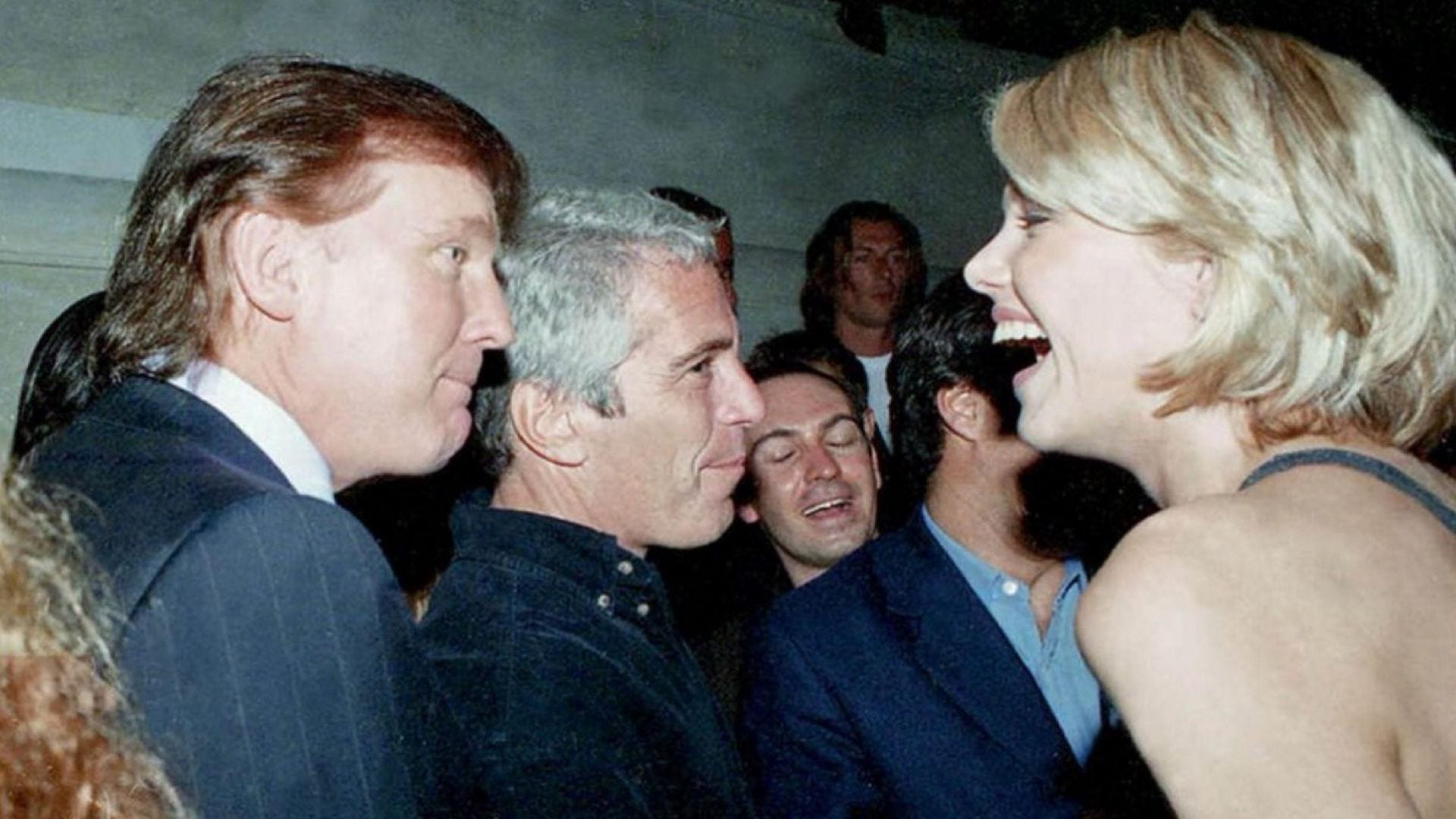
The photos are all from the Epstein files.
Greg a great perspective, thanks. One bit of commentary on the Chase and Dimon thing. If you can find it try to watch BBC NewsNight from last night, 2nd February. Coverage was about Peter Mandelson. He was a big shot in Tony Blair's government and Business Minister and Deputy Prime Minister under Gordon Brown. The big story here was that he leaked highly sensitive and confidential documents to Epstein. There is a call for a criminal investigation into what has been described as him breaching the Official Secrets Act, a crime tantamount to treason. Rightfully Scotland Yard/Metropolitan Police have opened such an investigation.
More to the point of a topic you focus on, Chase and Dimon. A NewsNight analyst located in the recent file release a few email exchanges between Mandelson and Epstein concerning propsed changes to US banking regulations, specifically capital adequacy rules which the banks were most against. Epstein asked if Dimon should call Darling (Alastair Darling the Chancellor of the Exchequer or Treasury Secretary to us) about an upcoming meeting between US officials and Darling, topic the new rules. Mandelson replied yes and suggested Dimon "beat him up a little bit". Mandelson received soon after the meeting ended Darling's Private Secretary minutes and immediately forwarded them to Epstein. In his after leaving office biography Darling addresses this call, saying Dimon beat him up or words to that effect.
Questions. Is Dimon being truthful about his relationship with Epstein? Perhaps Staley who was at Chase during this time relayed the message but I cannot imagine Dimon accepting such advice without digging into the origin story, the micromanager he is reputed to be.
As you rightfully say while Epstein is about sex trafficking, an extremely odious matter, the dangerous story to those involved concerns the ultimate underlying evils, money and lust for power. Robert Maxwell stole GBP400 million from his employees pension fund at the Mirror Group Newspapers, this I believe one of his lesser crimes. Epstine via Ghislaine may have been his protege and successor to a vast, global crime empire, funded by trafficking and using videos and other evidence of serial depravity to get the powerful to aid and abet in very serious crimes. This is what is so dangerous, the far reaching implications that will turn governments and today's rich and powerful to rubble. Unless, We the People never find out or if we do are helpless as the guilty have reached their ultimate objective, invincibility.
It’s TUESDAY🎉 You are the “Encyclopedia Britannica” of this hideous era. Well done!👏🏻👏🏻😉